I've killed a jasmine plant. There, I said it. It wasn't from neglect or underwatering. It was because I used a flimsy, decorative trellis from a big-box store that looked perfect in the picture but snapped under the weight of a healthy vine after one season. The plant, now a tangled mess on the ground, became susceptible to mildew and pests, and it never recovered. That failure taught me more about jasmine plant trellises than any generic guide ever could. The right support isn't just decoration; it's the backbone of your plant's health, flower production, and overall form. If you're staring at a jasmine that's more sprawling bush than elegant vine, or if you're worried about installing something that won't last, you're in the right place. Let's get into the specifics of choosing, installing, and training your jasmine on a trellis that actually works.
What You'll Find in This Guide
Why a Proper Trellis is Non-Negotiable for Jasmine
Jasmine vines are twiners. They don't have sticky pads or clinging tendrils. They need something slender to wrap their stems around. Without it, they'll use anything nearby—other plants, fence wires, themselves—creating a dense, interior-shaded thicket. This is where problems start. Poor air circulation invites fungal diseases like powdery mildew. The inner leaves, starved of light, yellow and drop. Energy gets wasted on a chaotic growth structure instead of being directed toward producing those iconic, fragrant blooms.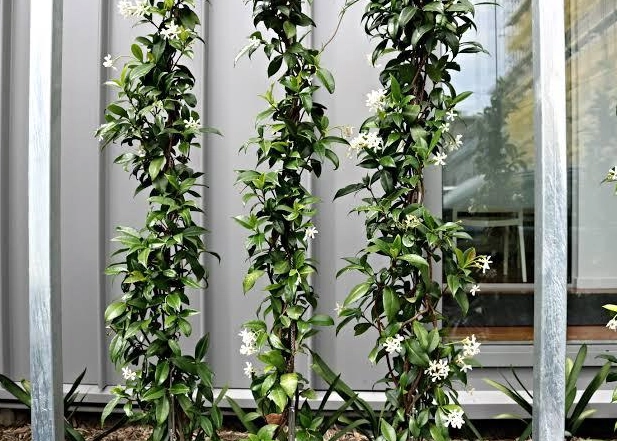
A well-chosen trellis does three critical things. First, it provides physical support for vertical growth, which jasmine naturally seeks. Second, it exposes more leaf surface to sunlight, supercharging photosynthesis. More energy means more flowers. Third, it creates an organized form that makes pruning, inspection, and care infinitely easier. Think of it as giving your plant a clear career path instead of letting it figure things out in a messy, crowded room.
Choosing Your Jasmine Trellis: Material, Design & Size
This is where most people go wrong. They pick for looks first. You need to pick for function and longevity. Let's break down the options based on where your jasmine lives.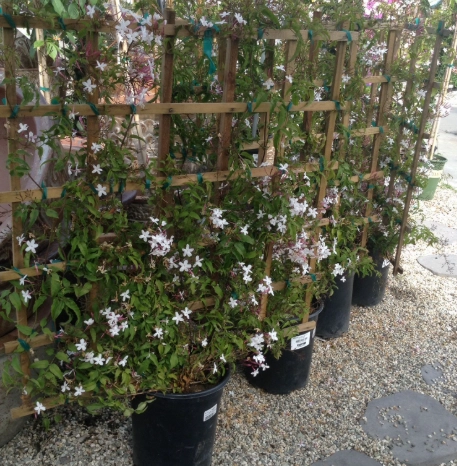
For Potted Jasmine (Indoors & Patios)
Your trellis must be proportional to the pot and stable. A common error is using a tall, heavy trellis in a small, light pot—it will tip over. For indoor pots, I lean towards powder-coated steel or bamboo obelisks. They're lightweight, rust-resistant, and have a small footprint. The thin steel rods (around 1/4 inch) are perfect for delicate jasmine stems to grip. Avoid plastic unless it's very sturdy; UV degradation makes it brittle.
For In-Ground Jasmine (Walls, Fences, Arbors)
Here, strength is key. A mature jasmine vine has significant weight, especially when wet. My go-to is galvanized or powder-coated steel grid panels (often called "cattle panels" cut to size) or heavy-duty cedar lattice. Pressure-treated wood works, but ensure it's rated for ground contact if any part will be buried. For a sleek, modern look, stainless steel cables tensioned between eye hooks are incredibly effective and nearly invisible once the plant fills in.
Size matters more than you think. A trellis should be at least 1.5 times the mature height you want your plant to achieve. For a wall cover, ensure the width is sufficient. A tiny trellis on a big wall forces you to prune aggressively, stressing the plant.
>| Trellis Material | Best For | Pros | Cons & My Notes |
|---|---|---|---|
| Bamboo | Potted plants, temporary supports, natural look. | Inexpensive, biodegradable, easy to find. | Rots in 2-3 years outdoors. Splinters can hurt stems. I use it for young plants only. |
| Powder-Coated Steel | Permanent in-ground or large containers. | Extremely durable, sleek, thin profile for gripping. | Higher cost. Cheap coatings can chip; invest in quality. |
| Cedar/Redwood | Garden walls, fences, arbors. | Natural rot-resistance, attractive, blends well. | Needs re-staining/sealing. Slats can be too thick for fine stems; choose lattice with thinner members. |
| Vinyl/Plastic | Low-budget options, very damp climates. | Never rots, easy to clean. | Can look cheap. Becomes brittle with sun exposure. I've had one crack in a cold snap. |
| Tensioned Wire/Cable | Modern walls, creating specific shapes. | Discreet, fully customizable, allows air flow. | Installation requires drilling into structure. Stems may need initial help staying on. |
Step-by-Step Installation: From Pot to Wall
Installing the trellis before or simultaneously with planting is crucial. Jamming one into the soil later damages roots. Here's my field-tested method.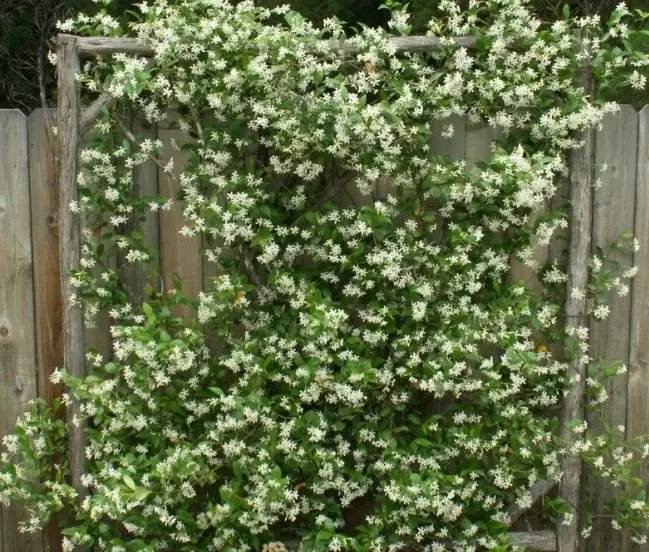
For Container Planting
Place the empty pot where it will live. Insert the trellis legs deep into the potting mix area, pushing until they hit the bottom inner rim of the pot. Now, add your potting soil around the legs, firming it as you go. This anchors the trellis from within the root ball. For extra stability on windy patios, use two small, green plastic plant ties to loosely secure the top of the trellis to a nearby stake or the pot's rim. Plant your jasmine slightly off-center, towards the base of the trellis.
For In-Ground Planting
This is a two-person job for larger panels. Position the trellis 6-12 inches away from the wall or fence to allow for air circulation and stem wrapping space. Dig your planting hole. Then, sink the trellis legs or support posts at least 18-24 inches into the ground, using a post-hole digger. For a wooden lattice against a wall, use heavy-duty wall anchors and spacers to keep it off the surface. Concrete in the posts for permanent structures. Only after the trellis is rock-solid do you plant the jasmine at its base.
Training and Pruning Your Jasmine Vine
Jasmine won't automatically climb. You must guide it, especially in the first year. Use soft plant ties, stretchy garden tape, or even old nylon stockings. Don't use wire or string that can cut into the stems.
Weave the young, flexible stems horizontally along the lower parts of the trellis. This encourages lateral branching and creates a fuller base. As new growth appears, gently spiral it around the trellis members. Check ties monthly and loosen them as the stem thickens.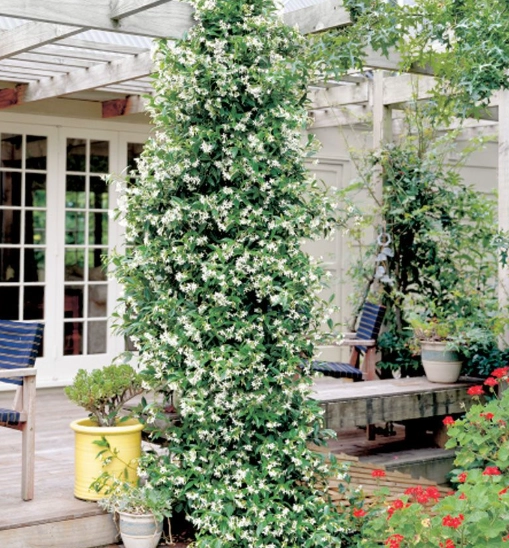
Pruning is your secret weapon. For summer-blooming jasmine (like common jasmine, *Jasminum officinale*), prune in early spring. For spring bloomers (like winter jasmine, *Jasminum nudiflorum*), prune right after flowering. The goal is to remove dead or overcrowded growth and tip-prune long runners to encourage bushiness. Always prune back to a healthy bud facing the direction you want new growth to go.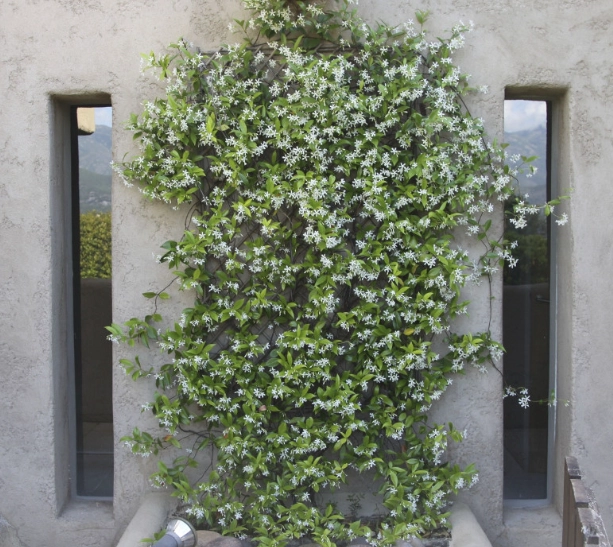
Common Trellis Mistakes (And How to Avoid Them)
Let's bypass the generic advice and talk about the subtle errors I see constantly.
Mistake 1: The "Too-Smooth" Surface. A glossy, painted metal or wide, flat wood slat offers nothing for the stems to grip. They'll slide down. Solution: Choose materials with texture or a small diameter. If you have a smooth trellis, add a mesh netting in front of it for the first season.
Mistake 2: Ignoring the Weight of Water. A vine is heaviest after rain or watering. A trellis that seems fine on a dry day can buckle when saturated. Factor this in.
Mistake 3: Letting Stems Self-Tangle. If two stems wrap around each other instead of the trellis, they'll eventually girdle and cut off each other's sap flow. Gently unwind them early on.
Mistake 4: Forgetting About Maintenance Access. Is your trellis attached in a way that you can't repaint the wall behind it? Can you reach all sides to prune? Plan for the future.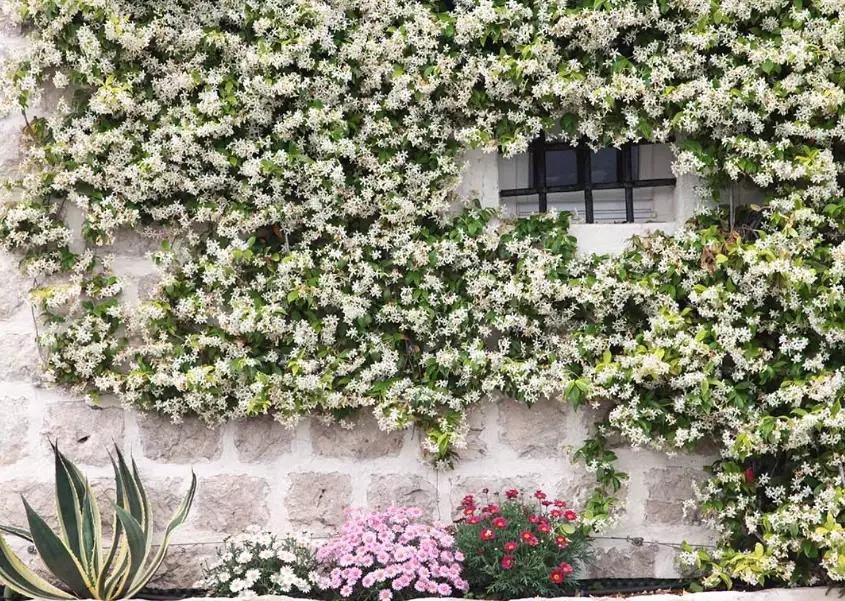
Your Jasmine Trellis Questions Answered
The journey from a struggling vine to a flourishing, fragrant curtain on your wall or patio starts with the right foundation. It's not the most glamorous part of gardening, but investing time in choosing and installing a proper jasmine plant trellis pays back tenfold in blooms, health, and sheer beauty. Skip the decorative impulse buy. Think like the vine thinks, and give it the support it truly needs.