I killed my first poinsettia. It was a gift, a beautiful, full plant with deep red leaves. Within three weeks, it was a sad, drooping skeleton in a pot of soggy soil. I followed the most common advice I found online: "water when the soil feels dry." Turns out, that advice is incomplete, and for poinsettias, it's often a death sentence. After years of trial, error, and consulting with nursery growers, I've learned that watering a poinsettia isn't about a schedule. It's about understanding the plant's language and its specific, often contradictory, needs.
Getting poinsettia watering right is the single most important factor between a plant that lasts until March and one that's compost by New Year's. Let's cut through the generic tips and talk about what actually works.
What You'll Learn Inside
Understanding the Poinsettia's Unique Thirst
Poinsettias (Euphorbia pulcherrima) are not like your pothos or snake plant. They're tropical plants that hate "wet feet" but also despise being bone dry for long. The root system is surprisingly fine and sensitive. The biggest misconception is treating them like a thirsty tropical or a drought-tolerant succulent. They're somewhere in the frustrating middle.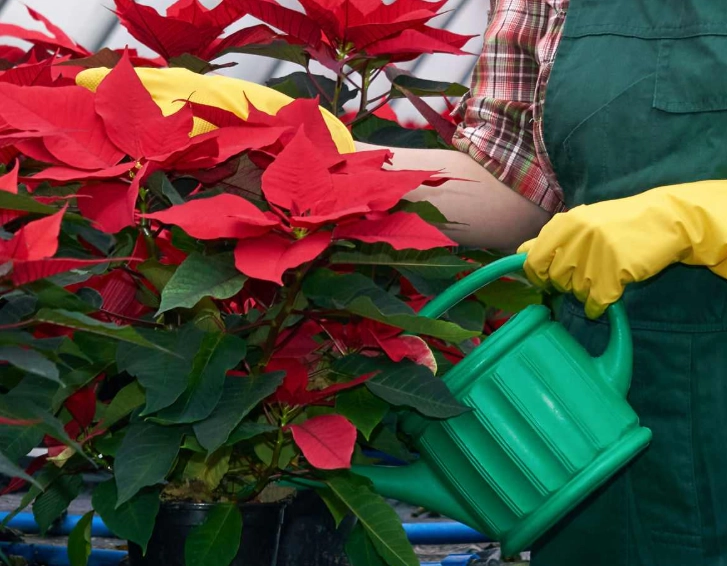
Think of their native habitat: well-draining slopes in Mexico. They get a good drink, then the water drains away quickly, and the roots get air. Our mistake is replicating the "drink" but not the "quick drainage" part. That decorative foil wrapper or ceramic pot without a hole is usually the culprit.
Why the "Finger Test" Can Fail You
You've heard it: stick your finger in the soil up to the first knuckle. If it's dry, water. Here's the problem with poinsettias. The top inch can be bone dry while the bottom third of the pot is a swamp, especially in dense, peat-heavy potting mixes and non-draining containers. Your finger gives you a reading from the top, not the critical root zone below.
A more reliable method? Lift the pot. Get a sense of its weight right after you water. Over the next few days, lift it again. You'll feel it get significantly lighter. When it feels light, not feather-light but distinctly lighter than its watered weight, it's time to check. Then, and only then, use the finger test deeper, aiming for the middle of the root ball near the stem base.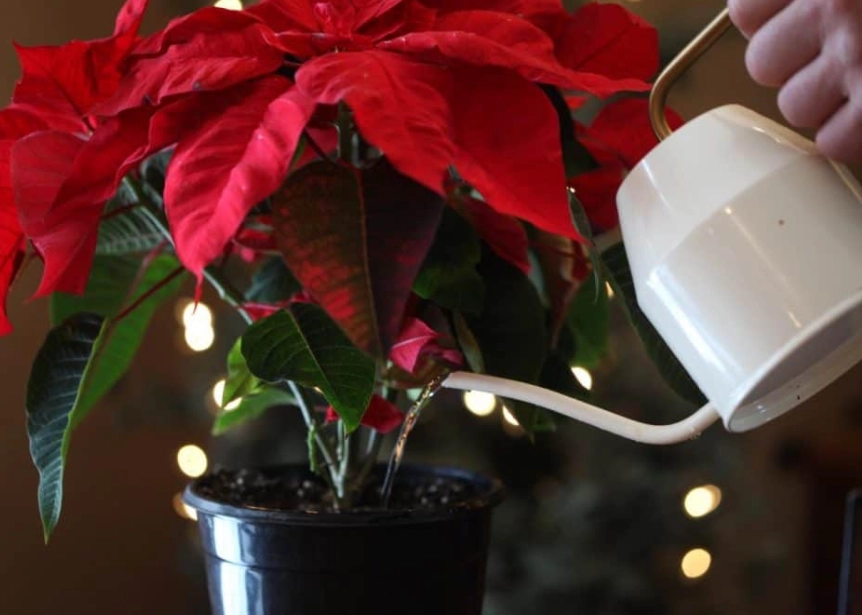
The Right Way to Water: A Step-by-Step Technique
This isn't just pouring a cup of water on the soil. Doing it wrong leads to uneven moisture and those dreaded dry pockets or, worse, root rot.
- Remove the Decorative Foil. Immediately. Poke holes in it or take it off completely when you water. Let the water drain freely into a saucer.
- Use Lukewarm Water. Cold tap water can shock the roots. Let it sit for an hour to reach room temperature.
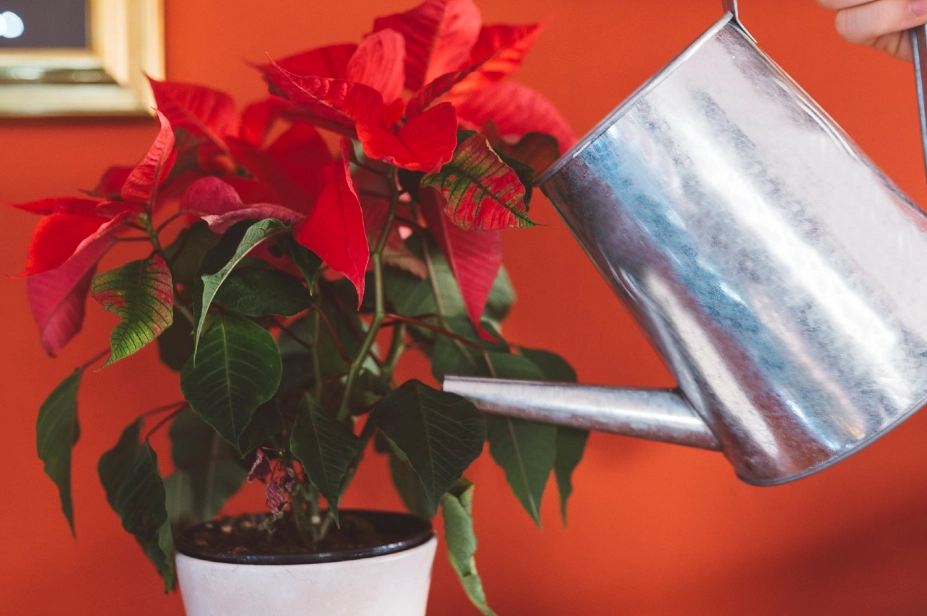
- Water Slowly at the Soil Line. Avoid pouring water directly onto the stems or colored leaves (bracts). Aim for the soil surface, circling around the base of the plant. Go slowly so the water has time to absorb and spread laterally, not just run down the inside edge of the pot.
- Soak Until Water Runs Out. This is non-negotiable. Water until you see a steady stream coming out of the drainage hole. This ensures the entire root ball is hydrated.
- The Critical Step: Empty the Saucer. After 15-20 minutes, come back and empty any water that has collected in the saucer. Do not let the pot sit in standing water. Ever.
How Often? A Realistic Guide (Not a Schedule)
Forget "water every Monday." Frequency depends on your home's environment. Here’s a realistic framework based on typical indoor conditions:
| Condition | Likely Watering Frequency | What to Watch For |
|---|---|---|
| Warm, sunny room (70-75°F) | Every 5-7 days | Soil dries faster. Check weight more often. |
| Cooler room (65-68°F) | Every 7-10 days | Slower evaporation. The "lift the pot" method is crucial here. |
| High humidity | Less frequent (add 2-3 days) | Soil stays moist longer. Risk of overwatering is high. |
| Low humidity (winter heating) | More frequent (subtract 1-2 days) | Soil and plant lose moisture quickly. Leaves may wilt faster as a signal. |
| Plant in a clay pot | More frequent | Clay breathes, drying soil faster than plastic. |
| Plant in a plastic/glazed pot | Less frequent | Retains moisture longer. Be extra cautious. |
Your plant will tell you. A slight, early wilting of the newer green leaves (not the red bracts) is a clear signal it's getting thirsty. It's better to water just as you see this slight wilt than on a rigid calendar date.
How Your Watering Needs to Change With the Seasons
A poinsettia isn't just a December decoration. With proper care, it can be a green houseplant year-round. Your watering must adapt.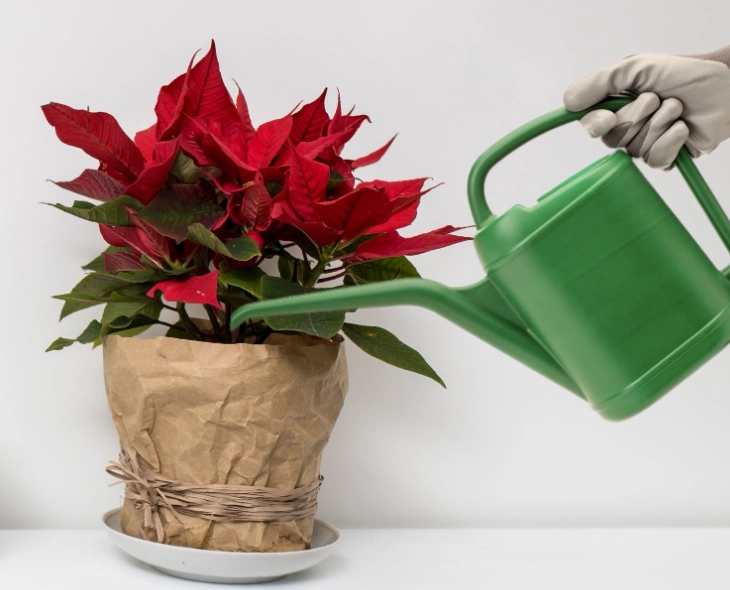
Holiday Season (Nov-Jan): This is the plant's "showtime." It's in active display mode. Watering needs are moderate as described above. The main enemy is dry, heated air causing stress, which can make you overwater in response.
Late Winter to Spring (Feb-May): After the bracts fade, the plant enters a resting phase. This is when you must reduce watering significantly. Let the soil dry out more thoroughly between waterings—maybe just a sip every 2-3 weeks to prevent the stems from completely shriveling. Overwatering now is fatal.
Summer (Jun-Aug): If you've kept it alive, it's growing again. Move it outside to dappled shade if possible. Watering frequency will increase with heat and light, but always follow the soak-and-dry principle. This is when you can feed it lightly.
Fall (Sep-Oct): To trigger re-blooming, the watering routine is tied to light control. Maintain consistent, moderate watering as you control its light exposure for 14 hours of darkness.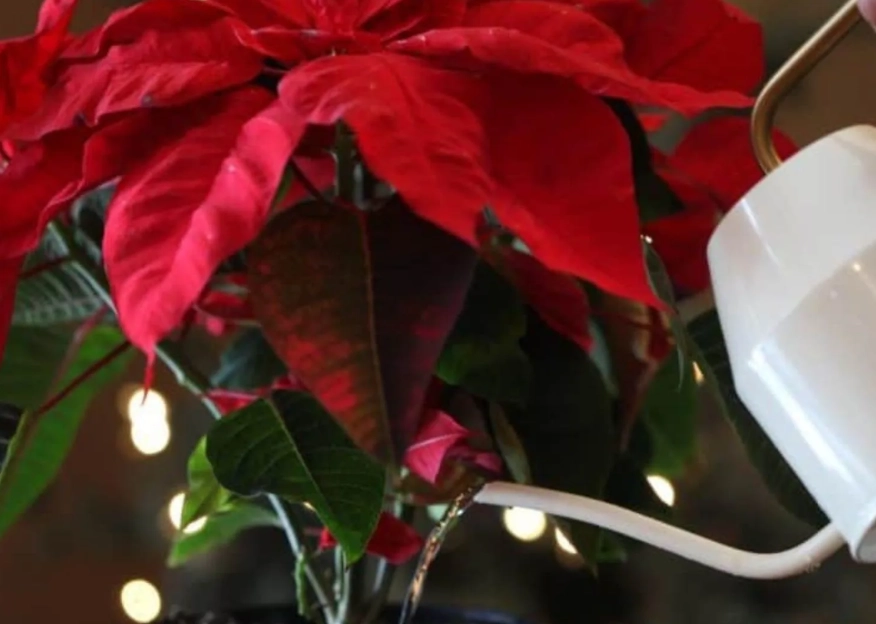
Diagnosing Watering Problems: Yellow Leaves, Dropping Leaves, and Wilting
Here’s how to decode what your poinsettia is saying.
Scenario 1: Yellowing Leaves Falling Off
This is classic overwatering. The leaves turn a pale, sickly yellow, often starting from the bottom, and drop off while still plump. The soil feels constantly damp or soggy. Action: Stop watering immediately. Let the soil dry out almost completely. Check the roots if possible; if they're brown and mushy, it might be too late. Ensure the pot drains.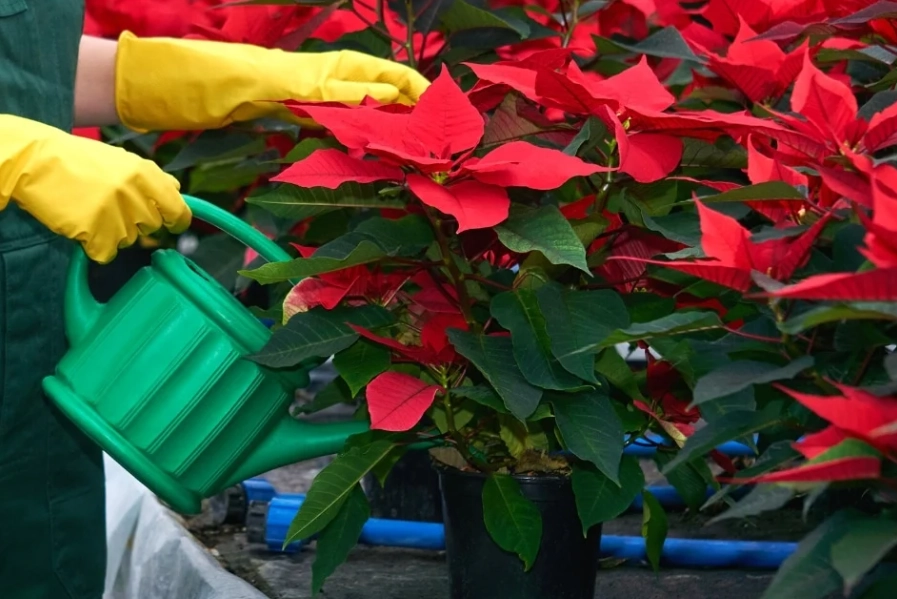
Scenario 2: Crispy, Dry Leaves Falling Off
This is underwatering combined with low humidity. The leaves turn brown and crispy at the edges before falling. The soil is a dry brick and may have pulled away from the pot's edges. Action: Give it a thorough, slow soak as per the steps above. You may need to place the pot in a shallow basin of water for 30 minutes to rehydrate bone-dry peat moss. Increase ambient humidity.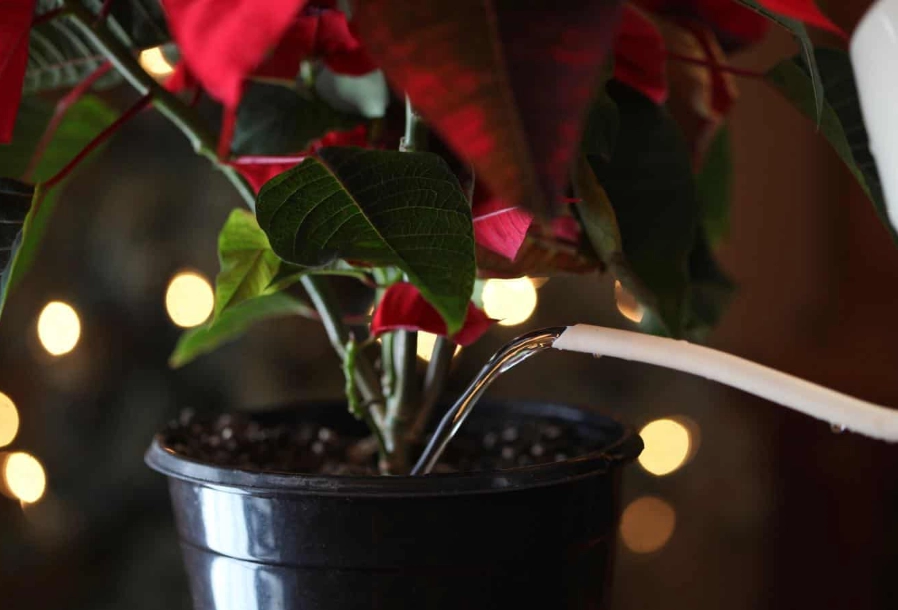
Scenario 3: Wilting with Soil that is Wet
A dangerous sign. This often means root rot has set in from chronic overwatering. The roots are dead and can't take up water, so the plant wilts even though the soil is wet. Action: Unpot immediately. Shake off soil, cut away any black/brown mushy roots with sterile scissors. Repot in fresh, well-draining mix and a clean pot. Water very sparingly and hope it reroots.
Scenario 4: Wilting with Soil that is Dry
The simplest fix. The plant is thirsty. Water it thoroughly using the method above. It should perk up within a few hours. If it doesn't, suspect heat stress or a draft.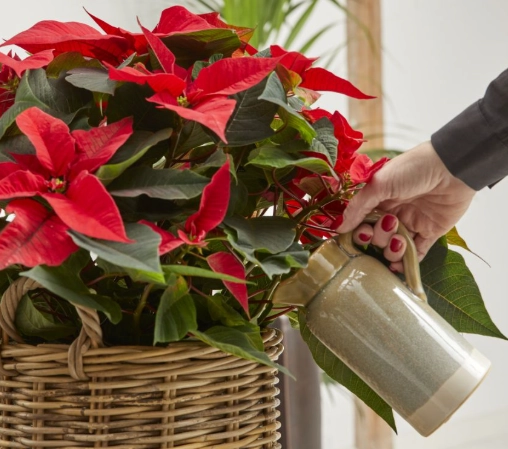
Your Poinsettia Watering Questions, Answered
Why are the leaves of my poinsettia falling off after I water it?
Sudden leaf drop after watering is usually a sign of shock. You might be using water that's too cold, or the plant was severely stressed from underwatering and the sudden influx is too much. It can also happen if the plant was sitting in a drafty spot. Always use lukewarm water and try to water before the plant gets to the point of severe wilt.
Can I use ice cubes to water my poinsettia like some stores suggest?
I strongly advise against it. The concept is to provide slow, measured watering. But ice-cold water directly on the roots and stems of a tropical plant is stressful. It can damage the sensitive root hairs and doesn't guarantee even saturation of the soil. Stick with room-temperature water applied properly.
My poinsettia is in a pot with no drainage hole. How do I water it?
You're playing on hard mode. The risk of root rot is extremely high. If you can't repot it, be incredibly conservative. Water tiny amounts, just enough to moisten the top few inches of soil, and never let a pool of water sit at the bottom. Use the "lift the pot" method to gauge weight, aiming to keep it on the lighter side. Honestly, repotting into a container with a hole is the best long-term solution.
How do I know if I need to change my potting mix to help with watering?
If your soil stays soggy for more than a week after watering, or if it dries into a hard, water-repellent brick, the mix is wrong. Nursery mix is often very peat-heavy. For long-term care, repot in spring into a quality, well-draining indoor potting mix. Consider adding a handful of perlite or orchid bark to increase aeration. The Royal Horticultural Society recommends a mix of loam-based compost with added grit for good drainage.
Is misting the leaves a good alternative to watering?
No. Misting increases humidity around the leaves slightly, which poinsettias appreciate, but it does nothing to address soil moisture. It's a supplemental practice, not a replacement for proper root watering. In fact, misting the colorful bracts too much can cause spotting or promote disease.
The secret to poinsettia watering isn't a secret at all. It's observation. Ditch the calendar, learn the weight of your pot, master the thorough soak-and-drain technique, and listen to what the leaves are telling you. It transforms this holiday symbol from a disposable decoration into a resilient, year-round companion. That first poinsettia I killed taught me more than any success ever could—sometimes the best lessons come from understanding exactly what went wrong.